
A Century of Pleasure Revolution: A Brief History of Women’s Sexual Liberation
By Taylor Neal
It’s Women’s Day, so naturally I can’t help but thinking how we got to wear we are as women in regards to sexuality and pleasure.
Being a woman working at a woman-owned Sex & Relationship Therapy clinic with all women practitioners, I can’t help but look around me at the sexual wellness landscape in the western world and consider the women that came before us, and the women that came before them, that made it possible for such a marvellous thing to exist as it does in some countries today.
The bubble I exist in as a sexologist in Australia is occupied on a majority by women on an international scale. Every time I open my social media feeds I see women and queer people educating about pleasure, consent, communication, attachment, anatomy, menstruation, and new sexual wellness products like toys, lubes, and intimacy oils meant to bring more pleasure and deeper intimacy in everyone’s sex lives, not just those of women.
It’s women and queer people that had to fight back against patriarchal systems of sexual oppression to finally get to a place where we had a voice, men weren’t going to do it, so of course it’s women and queer people dominating these spaces.
For us to reach this moment, women and queer communities have been rallying together and pushing their way into spaces that once excluded them for generations. We have worked tirelessly to step out from under the constraints of the marital bedsheets and build a global sexual wellness landscape rich with choice, variety, accessible education, and spaces for healing. Today, that landscape has grown into an industry worth more than $1.2 billion in Australia alone in 2026.
So how did we get here?
How did we get to a point where women could speak opening about sex, educate about sex, enter schools to give comprehensive sex education, and support clients therapeutically to create more fulfilling, aligned, safe sex lives? How did we get to the great smut revolution of the 2020s that we’re seeing now? META aside (social media censorship is the bane of my existence), and though we still have a long way to go and the state of the world is anything but bright and cheerful these days, it is actually quite an honour and a privilege to be able to say that I pay my rent by supporting folks to have better sex. When you take history into account, it’s an honour and a privilege to be able to go to sex therapy (though it should be a human right).
It’s an honour and a privilege to be able to buy a body-safe butt plug.
And it’s important for me, as a practitioner and a feminist, to stay aware of, and incredible humbled by, the fact that I would not possibly be able to do this work that I love if not for the generations of powerful women before me that chipped away at the walls of the systems that kept them silent and paved the way for those of us doing this work now to be able to stroll into our offices and advocate for pleasure-based sex for all.
There are a lot of firsts here in our modern lives when we look across the history of women’s pleasure.
I can say rather certainly that I am the first woman in my bloodline to be openly queer, the first to be at my current age and without children and unmarried by choice. The first to speak openly about sex, masturbation and pleasure wherever I go. And I can definitely say I am the first woman in my bloodline to have an entire shelf in my closet dedicated to sex toys.
When I stop and really think about this, and feel for the gratitude I have for the work I do and existing in a time when I can do it, it truly blows me away. Even looking just one generation above me (I’m a millennial) I can see the prevalent shame and silence that surrounds the topic of sex, the hush-hush way menstruation and masturbation are still regarded.
But I can see, too, the glimmers of activism and resistance, and change, when I look across history and when I see women of older generations rebranding middle-age and later life across my socials daily. Women in their 70s doing OOTD videos, doing make-up reviews, resisting anti-aging propaganda, and openly sharing about their sexuality. We’re starting to see older women in media portrayed as sexual humans, we’re seeing older women masturbating and creating sex toys (a nod to Grace and Frankie) and being interviewed and speaking publicly about menopause and sex and pleasure and eroticism.
And while, yes, there is still lots to be critical about, there is also a lot to stop and marvel at when you consider how just 25 years ago the clitoris still wasn’t a fully understood organ.
So for Women’s Day, I wanted to take a look at the past century, to really acknowledge and pay respect to the women that came before us, that made it possible for me to be here today, writing about sex on the internet yet again, and safe and supported to do so.
Below is a brief look at some of the key milestones over the last century that helped shape women’s sexual liberation.
Flappers and Birth Control (1910s–1920s)
We’ll start our journey at the beginning of the 20th century, with one of the earliest foundations of modern sexual liberation: the fight for reproductive control.
In the early twentieth century, distributing information about contraception was illegal in many countries. Activists such as Margaret Sanger challenged these laws, opening some of the first birth-control clinics and advocating for women’s right to access contraception. For many women, this marked the beginning of a broader movement for bodily autonomy.
At the same time, the social upheaval that followed World War I sparked what historians often describe as the first modern sexual revolution. During the 1920s, young women, often called “flappers,” began challenging rigid Victorian expectations around femininity, sexuality, and independence and expanding beyond the confines of traditional gender expectations.
Flappers cut their hair short, wore shorter skirts, smoked and drank in public, and embraced new freedoms in dating and social life. Crucially, this era also marked the rise of modern youth and dating culture, as young people began socialising, courting, and forming relationships more independently from family supervision.
While these shifts were most visible in urban middle-class communities and did not represent the experiences of all women, they signalled an important cultural change. For the first time in modern Western society, women were beginning to publicly challenge the idea that their sexuality existed solely for marriage and reproduction, laying cultural groundwork for the larger sexual revolutions that would follow later in the twentieth century.
World War II and Wearing the Pants (1940s)
World War II created another unexpected turning point in women’s social and economic independence.
With millions of men deployed overseas, women entered factories, offices, farms, and technical industries in unprecedented numbers. In countries across the Western world, women took on roles that had previously been reserved almost entirely for men (operating heavy machinery, working in engineering and manufacturing, and supporting wartime logistics).
We started wearing the pants, quite literally.
For many women, this was their first experience of earning their own income, managing finances, and participating in public life outside the home. Economic participation brought new levels of autonomy, decision-making power, and confidence.
When the war ended, governments and cultural messaging encouraged women to return to domestic roles so that returning soldiers could reclaim jobs. Yet the wartime experience had lasting psychological and social effects. Many women had experienced independence, financial agency, and a sense of contribution beyond the household.
These shifts did not immediately transform gender equality, but they planted an important seed. The contrast between women’s wartime capabilities and the restrictive expectations of post-war domestic life would later fuel frustration and questioning, helping plant seeds for the feminist movements that emerged in the 1960s.
The Pill and the Sexual Revolution (1960s)
Few developments transformed women’s sexual freedom more dramatically than the introduction of the birth control pill.
The combined oral contraceptive pill was approved in 1960 by the U.S. Food and Drug Administration. It gave women a highly effective and private way to prevent pregnancy for the first time in history. This meant women could separate sex from reproduction with a level of reliability that had never before existed.
The decades leading up to this moment had already set the stage. After World War II, many Western countries experienced the post-war baby boom, a period marked by strong cultural pressure toward marriage, domesticity, and large families. By the late 1950s and early 1960s, however, younger generations were beginning to question these expectations.
Against this backdrop, the pill helped fuel the broader sexual revolution of the 1960s. Social movements advocating for civil rights, anti-war activism, and youth counterculture challenged traditional authority and moral norms. Ideas around “free love”—the belief that people should be able to pursue sexual relationships without rigid social restrictions and outside of conventional monogamous relationships—became part of the cultural conversation.
For many women, reliable contraception meant greater control over education, careers, and the timing of family life. It also helped shift social attitudes around premarital relationships and women’s independence.
However, while sexual norms were loosening, women’s pleasure was not always centred in these conversations. In many cases, the early sexual revolution still prioritised male desire, and women were often expected to be sexually available without necessarily having their own needs or experiences acknowledged.
This tension would soon become a major focus of feminist activism in the later half of the 20th century.
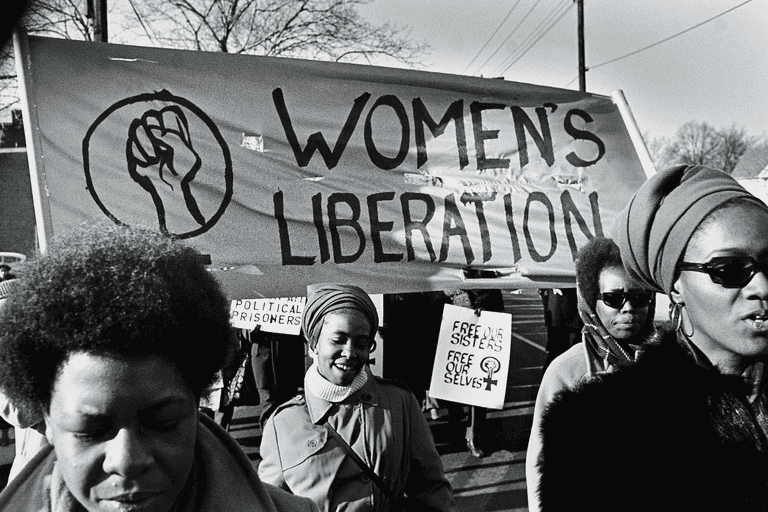
Second-Wave Feminism: “The Personal Is Political” (1960s–1980s)
Second-wave feminism fundamentally reshaped conversations about women’s bodies and sexuality in politics, media, protest, and art.
The movement challenged the idea that women’s fulfilment should come solely from marriage and motherhood. Feminists argued that issues once considered private such as sexuality, reproductive rights, domestic violence, and relationship dynamics were actually deeply political.
Consciousness-raising groups, activism, and new feminist writing helped bring hidden issues into public discussion, including:
reproductive rights
sexual coercion
the orgasm gap
workplace inequality
violence against women
This period reframed sexuality not just as a private matter, but as a question of power, autonomy, and equality.
Rewriting Sexual Science (1970s)
For centuries, medical science misunderstood (ignored) female (vulva-bearing) sexual anatomy.
In 1970, feminist writer Anne Koedt published the influential essay The Myth of the Vaginal Orgasmunder the New York Radical Women, which challenged the widely accepted belief that women should achieve orgasm through vaginal penetration alone. The essay drew attention to the central role of the clitoris in female pleasure and criticised the way male-centred assumptions had shaped sexual science.
Around the same time, sex researchers such as William Masters and Virginia Johnson published groundbreaking studies on human sexual response. It was during this time, too, that Betty Dodson was running her BodySex workshops in New York, which were in-person workshops focused on women’s pleasure, masturbation, and teaching women how to own their pleasure. Yes, badass indeed.
These developments dramatically helped shift the conversation away from male-centred sexual expectations toward a better understanding of women’s bodies and pleasure. And women were learning how to have orgasms on their own and in groups, as it god damn should be!!
Feminist Sex Shops and Sexual Wellness (1970s–1990s)
As feminist conversations around pleasure grew, women began creating spaces dedicated to sexual education, empowerment, and the destigmatisation of female desire.
In 1974, Dell Williams founded Eve’s Garden in New York City, which is widely considered the first woman-owned and woman-operated sex toy business in the United States. Williams was inspired after attending feminist sexuality workshops and realizing women had no comfortable place to buy vibrators or sexual health resources.
The shop emphasized:
sexual education
masturbation positivity
high-quality vibrators
books on sex and pleasure for women
This store helped launch the feminist sex-positive retail movement.
Other early pioneers included:
Good Vibrations: Founded by Joani Blank in 1977 in San Francisco and considered the second feminist sex shop in the U.S. The store became known for:
sex education workshops
feminist erotica and books
body-safe sex toys
open discussions about pleasure and anatomy
Babeland: Founded by queer feminists Rachel Venning and Claire Cavanah in Seattle in 1993 as Toys in Babeland. Founded by two queer feminists who wanted a welcoming, educational alternative to traditional sex shops. It became a safe space for the LGBTQIA+ community to access safe sex education, resources, and toys.
These feminist sex shops transformed the cultural landscape in several ways:
Destigmatising pleasure: They reframed sex toys and sexual wellness products as tools for self-knowledge and empowerment, rather than indulgence or shame.
Centering women’s experiences: Unlike mainstream adult stores, these spaces prioritised products, language, and educational resources designed with women in mind.
Creating community: Workshops, events, and book selections fostered dialogue about consent, anatomy, and pleasure, helping women (and queer communities) reclaim their sexuality in a supportive environment.
Influencing mainstream culture: By normalising conversations about sexual health and pleasure, these shops helped pave the way for today’s billion-dollar sexual wellness industry and the integration of sex-positive messaging in mainstream media.
In essence, feminist sex shops were not just retail spaces, they were safe incubators for female desire, pleasure, and sexual autonomy. They helped move sexual wellness out of secrecy and into the realm of education, empowerment, and everyday life.
Sex Worker Rights (1970s–Present)
Another important (though often overlooked) part of the sexual liberation movement has been the fight for sex worker’s rights.
For much of history, sex workers have faced criminalisation, stigma, and unsafe working conditions. Beginning in the 1970s, sex workers and their allies began organising globally to advocate for safer labour conditions and the decriminalisation of consensual adult sex work.
One early organisation was COYOTE (Call Off Your Old Tired Ethics), which campaigned to change public perceptions of sex work and advocate for legal reform. Activists reframed sex work as labour rather than moral deviance (Sex Work Is Work), highlighting issues of workplace safety, bodily autonomy, and human rights.
In Australia, organisations such as Scarlet Alliance have played a key role in advocating for harm-reduction policies, safer working conditions, and the reduction of stigma.
Sex worker activism has also influenced broader conversations about consent, sexual health, and bodily autonomy. Their advocacy has helped expand discussions of sexuality beyond morality and toward rights, safety, and dignity.
Third-Wave Feminism and Women’s Sex Talk (1990s–2000s)
By the 1990s, a new generation of feminists (we call this 3rd Wave) began reframing sexuality again.
Third-wave feminism emphasised:
bodily autonomy
sexual self-expression
inclusivity across sexual identities
reclaiming pleasure as empowering
Popular culture began reflecting these changes. Television shows like Sex and the City openly discussed female pleasure, masturbation, and sex toys in mainstream media.
A key contribution came from Black feminist thought and intersectionality, pioneered by scholars and activists like Kimberlé Crenshaw and Audre Lorde. They highlighted that women’s experiences of sexuality are shaped not just by gender, but also by race, class, sexuality, and other social factors.
This intersectional lens challenged mainstream feminist narratives that often centred white, middle-class women, calling attention to how systemic oppression and cultural stereotypes affect sexual autonomy and pleasure. Black feminists, for example, critiqued the hypersexualisation of Black women and emphasised the need for self-defined sexual agency rather than conformity to societal norms.
By integrating intersectionality, third-wave feminism expanded the conversation: sexual liberation was not just about freedom from marital or patriarchal constraints, it was about empowerment for all women, across different identities and experiences. This approach laid the groundwork for inclusive sexual wellness movements, sex-positive media, and activism that continues to shape conversations around pleasure today.
Mapping the Clitoris (1998–2005)
For centuries, medical science largely ignored or misunderstood the clitoris, leaving female pleasure invisible in anatomy textbooks, sexual research, and cultural conversations. Considering it wasn’t even properly in Gray’s Anatomy until the 40th Edition in 2008, it’s no wonder there’s still so many of us that don’t quite understand our pleasure yet. But this is changing!
In 1998, Australian urologist Helen O'Connell conducted detailed dissections of the female pelvis, revealing the full internal structure of the clitoris for the first time. Her findings mapped a network of erectile tissue far larger and more complex than the small external glans commonly depicted. Follow-up studies using MRI in 2005 confirmed these findings, showing that the clitoris extends internally with two crura and vestibular bulbs, meaning only about 10% of the organ is externally visible.
This scientific breakthrough had profound cultural and sexual implications:
It corrected centuries of anatomical misinformation, giving women and clinicians a more accurate understanding of female sexual response.
It reframed conversations about pleasure, highlighting that vaginal penetration is not the primary source of orgasm for most women and emphasizing clitoral stimulation.
It influenced feminist and sex-positive education, helping activists, therapists, and sexual wellness businesses centre women’s pleasure in ways previously neglected.
It challenged cultural assumptions about female sexuality, reinforcing the message that women’s sexual experiences are valid, complex, and worthy of attention.
By the early 2000s, these discoveries were being incorporated into sex education, feminist literature, and media discussions, helping bridge the gap between scientific knowledge and everyday understanding of female pleasure. The mapping of the clitoris became a pivotal moment in the broader movement to reclaim sexual autonomy, inform empowerment, and guide the modern sexual wellness industry. And it definitely changed how women understand our own bodies and pleasure today.
The Digital Era: Sex Education Online (2010s)
The rise of the internet dramatically changed how people learn about sex and explore their desires. On the one hand, we see podcasts, blogs, and social media allowing sex educators, therapists, and activists to share reliable information about consent, communication, anatomy, and pleasure.
On the other hand, we see how the widespread accessibility of online pornography begins shaping cultural conversations about desire, fantasy, and sexual expression, and also how this becomes a main resource for youth trying to find sex education with no where else to go. For many, porn provides a space to explore sexuality, learn about different bodies, and discover what gave them pleasure, though it also sparks debates about representation, consent, and ethical production, and how this impacts sexuality in our culture.
The sexual wellness industry also expanded rapidly during this era, with women increasingly founding companies focused on:
body-safe sex toys
lubricants and sexual health products
inclusive sexual education
pelvic health and pleasure coaching
Together, these developments online (for better and worse) helped reframe sexual wellbeing not as indulgence or taboo, but as a legitimate part of overall health and empowerment, blending education, exploration, and access to safe, inclusive resources.
The Pleasure Revolution Today
The past decade has seen what we might call a smut renaissance, a surge in female and queer-driven romance, fantasy, and erotic literature that centres women’s desire. Authors like Sarah J. Maas and E. L. James have achieved global success by blending emotional storytelling with raunchy scenes targeting female desire and pleasure. Platforms like BookTok and other online communities have propelled these narratives into mainstream culture, creating spaces where readers can explore sexuality, identity, and desire openly.
At the same time, women are increasingly founding businesses in the sexual wellness and pleasure industry, producing body-safe sex toys, educational platforms, lubricants, intimacy oils,vulvovaginal care products, and coaching and sex therapy services. The rise of accessible online pornography has also expanded opportunities for sexual exploration and learning, offering representations of diverse bodies and experiences, though it continues to prompt important conversations about consent and ethics. Together, these shifts are creating a thriving pleasure economy and ecosystem built around sexual wellbeing, education, intimacy products, and body literacy.
Today, conversations about sexuality have moved from liberation toward integration.
Sexual wellbeing is increasingly understood as part of overall health, alongside mental and emotional wellbeing. Discussions now focus on:
understanding anatomy and pleasure
trauma-informed intimacy
consent and communication
closing the orgasm gap
body politics and autonomy
inclusive sexuality across genders and identities
For many women, sexual exploration now includes therapy, education, literature, and community. What was once hidden behind silence and shame, only to be mentioned in hushed tones with a doctor or spouse, has become a space of curiosity, knowledge, and empowerment.
The story of women’s sexual liberation is still being written, however. Progress has never been linear, and debates around reproductive rights, sexual ethics, and gender politics continue today, arguably in more immediate and harmful ways than ever. Yet the trajectory is clear: over the past century, women have moved from being objects within sexual narratives to authors of their own pleasure. And there’s no way in hell we’re stopping now.
Perhaps the most powerful shift of all is this: women are no longer waiting for permission to explore their sexuality.
Together, we’re building industries, writing stories, conducting research, and leading conversations. The pleasure revolution, decades in the making, is only just beginning. But this time, it is inclusive, intersectional, and unapologetically obsessed with women’s desire.
So next time you scroll TikTok or come across an article by a woman about pleasure, sex, or anything related, pause and take a moment to feel for the generations of women before her. Feel for your grandmother that maybe never had an orgasm, and her mother that maybe didn’t either, and hers before her that didn't know she had a clitoris. Feel for how incredible your body is, and the women in your life that you can lean on and share your experience with.
We’re in this together, Happy Women’s Day!