
Menopause and Body Image: Finding Your Own Body Confidence
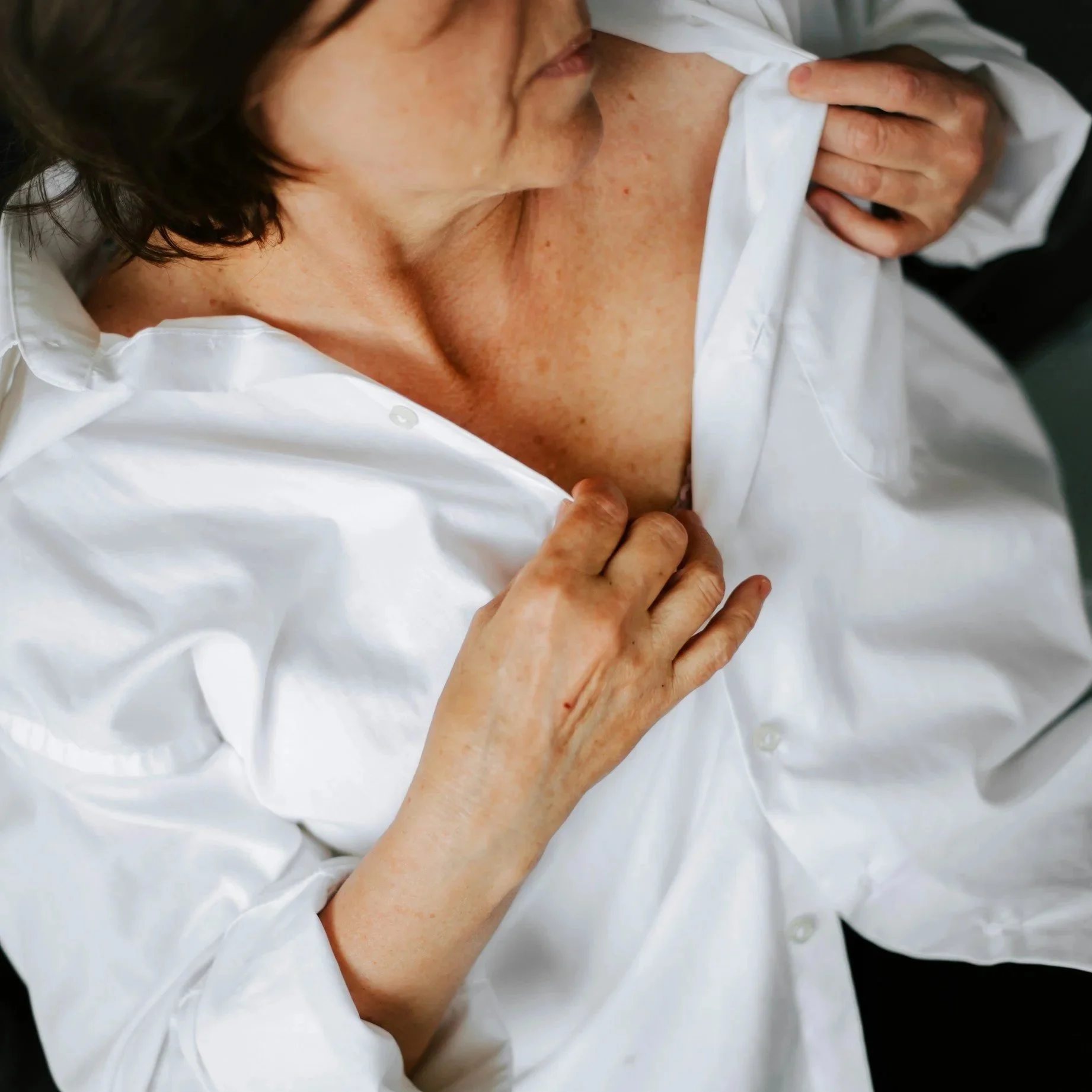
By Carolyn Lancaster
If you're struggling with body image during perimenopause or menopause, you're not alone.
Many women find that hormonal changes, stress and shifting life roles affect not only how they look, but how they feel about themselves.
Perhaps your body has changed shape, maybe your sleep is disrupted, you notice your skin is changing, or your energy and libido feels unpredictable. In a youth obsessed culture driven by billions of dollars in marketing, specifically designed to make you feel that aging is a problem, it’s easy to see why women may at times feel undesirable during menopause.
Although feeling anxious or depressed about your body and losing confidence may seem inevitable because of menopausal changes, it's not. The good news is that research tells us something reassuring; although menopause changes your body, it doesn't have to diminish your sense of self, your confidence or your capacity to feel desirable.
Even though your body is changing, that doesn’t mean it is failing.
During healthy perimenopause and menopause, changing hormone levels affect almost every system in the body. Changes in muscle mass, fat distribution, skin elasticity, sleep, mood and energy are biological and normal. Also, they don’t have to define a woman’s self worth.
Every woman's experience is different.
Your emotional wellbeing, relationships, stress levels and life circumstances all influence how you experience this transition and how it impacts your wellbeing.
Some women judge themselves harshly for the changes that occur during ageing and menopause. It's understandable when women in modern societies spend decades receiving messages that beauty means looking young, slim and wrinkle-free. Often the unrealistic messages we may have received throughout our lives remain unexamined, until menopause, when we are confronted by inevitable change.
Reclaiming Our Body Image
Our thoughts can be like background music creating moods and emotions.
What do you say to yourself when you look in the mirror in the morning, or see yourself naked?
If you are having thoughts such as, “I hate my wrinkles”, or “No one will find me attractive now,” you may want to start to get curious about how these habitual thoughts are affecting your self acceptance.
Research consistently shows that women who compare themselves to unrealistic appearance ideals experience greater body dissatisfaction, anxiety and depression. Your body’s changes are not the problem. It's the impossible expectations women have been asked to meet, not only by others, but also by themselves.
With this understanding in mind, perimenopause and menopause can become an opportunity for greater self awareness and body acceptance.
Instead of asking, "How do I look?" you could try pausing and asking, "What is my body telling me today?" This simple question can shift your attention from self criticism towards curiosity and awareness.
Body image research describes this as embodiment, experiencing life from within your body rather than constantly judging it from the outside or imagining what others are thinking of us.
Focussing on exploring more of what you desire for yourself can also change the focus from being self critical and monitoring your body to finding greater pleasure.
Instead of asking “Am I desirable to others?”, the question can shift to asking yourself, “What do I want or desire?” or, “What brings me greater pleasure and wellbeing?”
Wellbeing and Feeling Desirable During Menopausal Changes
Research also tells us that feeling desirable depends on much more than appearance, even during and after menopause.
It’s more about feeling emotionally connected, safe, rested, confident, self accepting and playful.
For many women, sexual desire doesn't disappear during menopause, it simply changes, maybe requiring more time, or exploring more of what we find authentically desirable rather than relying on what we’ve known to work in previous chapters of our lives.
If you find yourself asking whether someone else finds you attractive, you could ask yourself, “When do I feel most alive and have a sense of pleasure?”
You may create a list of activities that bring you pleasure. For some women it's swimming in the ocean, a long hot bath, a self-massage with scented oil, walking in nature, dancing and singing to a favourite song, or sharing intimacy and intending not to worry as much about what our body looks like.
Feeling desirable often begins long before another person notices us.
It begins with feeling present in our own body.
For many of us living busy lives, menopausal changes may be an opportunity to slow down and ask ourselves these kinds of questions, maybe for the first time in our lives.
Remembering What Your Body Makes Possible
One of the findings from body image research is the idea of “body functionality appreciation.”
Instead of focusing only on appearance, we can begin to notice what our body allows us to experience.
Your body may let you hug someone you love, enjoy the smells of fresh flowers, watch a sunset, create a delicious meal, or laugh until your stomach hurts. Your body is not simply something to be looked at. It is how you experience your life.
Menopause is often spoken about as a time of loss and struggle.
Without ignoring the challenges menopausal changes may create for a period of time, perhaps it can also become a time of redefining: redefining beauty, desirability and your relationship with yourself.
Becoming comfortable with midlife changes is about beginning to feel at home in our bodies and finding new ways of supporting ourselves as we become more resilient, and accept change is inevitable. We can then free ourselves from not spending all of our energy and resources trying to become who we used to be, and instead become curious about what our lives are becoming and how we can shape that into something we choose, based on what brings us pleasure and aliveness.
Your body has carried you through every season of your life to this moment, and perhaps, for the first time in a long time, you get to decide what feeling attractive, desirable and beautiful means for you.
You don't have to pressure yourself to feel beautiful every day. You don't have to love every part of your body. With small moments of compassion and care, you can feel more self acceptance and that may be one of the most resilient foundations for feeling attractive and desirable for life.
5 Gentle Practices to Support Your Body Image and Nervous System
When you're stressed, exhausted or overwhelmed, your nervous system naturally shifts into protection mode. It's harder to feel connected to your body, or to experience yourself as attractive and desirable, when you're simply trying to get through the day.
The good news is that calming your nervous system doesn't have to involve long meditation sessions or another task on your list. These small, evidence-informed practices can help you reconnect with your body in just a minute or two.
1. Calm Your Nervous System with Your Breath
When you're feeling overwhelmed, pause and take three slow, comfortable breaths into your belly. If it feels right, let your exhale be a little longer than your inhale.
As you breathe, notice one place in your body that feels neutral or at ease. It might be the warmth of your hands, your feet resting on the floor or the gentle movement of your breath.
Rather than trying to change how you feel, simply allow yourself to notice what feels steady or supportive. This can help settle your nervous system and gently shift your attention away from self-criticism.
2. Listen to What Your Body Needs
Many of us have learnt to ask, "How does my body look?"
Instead, try asking:
"What does my body need from me right now?"
The answer may be surprisingly simple. A glass of water. A healthy meal. A few minutes outside. Gentle movement. Rest. Connection. A quiet moment to yourself.
Each time you respond to your body's needs with care instead of judgement, you're strengthening trust in your body rather than fighting against it.
3. Replace Self-Criticism with Self-Compassion
Notice how you speak to yourself when you're getting dressed or looking in the mirror.
If you catch yourself thinking, "I hate how I look," pause and ask:
"What would I say to someone I love if they were feeling this way?"
Research shows that self-compassion is linked with healthier body image, lower stress and greater emotional resilience. Kindness won't erase difficult feelings, but it can soften the way you experience them.
4. Move Your Body to Feel Better, Not to Change It
Movement doesn't have to be about burning calories or changing your appearance.
Instead, ask yourself:
"What kind of movement would help me feel more like myself today?"
It might be stretching when you wake up, dancing to your favourite song, walking in nature, swimming or practising yoga.
When movement becomes an act of care and play, rather than correction, it can support your mood, reduce stress and help you reconnect with your body's strength and vitality.
5. Focus on What Your Body Makes Possible
When you notice yourself becoming preoccupied with appearance, gently shift your attention to what your body allows you to experience.
Perhaps today your body can support you to:
Laugh with a friend.
Hug someone you love.
Walk beneath the trees.
Enjoy a warm shower.
Prepare a meal.
Watch the sunset.
Rest after a busy day.
Your body is far more than something to be looked at. It is how you experience your life.Taking a moment to appreciate what your body makes possible can help shift your focus from appearance to gratitude, supporting a more compassionate and connected relationship with yourself.
The goal isn't to force yourself to love your body every day. It's to create small moments of safety, curiosity and compassion that help you reconnect with yourself. Over time, these moments can lay the foundation for feeling more at home in your body, and for defining attractiveness and desirability on your own terms rather than someone else's.
References
Alleva, J. M., Tylka, T. L., & Van Diest, A. M. K. (2017). The Functionality Appreciation Scale: Development and psychometric evaluation. Body Image, 23, 28–44.
Davis, S. R., Baber, R., et al. (Monash University). Research on menopause, sexual wellbeing and healthy ageing.
Jean Hailes for Women's Health. Evidence-based resources on menopause and healthy ageing. https://www.jeanhailes.org.au
Mehling, W. E., et al. (2012). The Multidimensional Assessment of Interoceptive Awareness (MAIA). PLoS ONE, 7(11), e48230.
Neff, K. D. (2003). Self-compassion: An alternative conceptualization of a healthy attitude toward oneself. Self and Identity, 2(2), 85–101.
Roberts, T.-A., & Fredrickson, B. L. (1997). Objectification Theory: Toward understanding women's lived experiences and mental health risks. Psychology of Women Quarterly, 21(2), 173–206.
Tylka, T. L., & Wood-Barcalow, N. L. (2015). What is and what is not positive body image? Body Image, 14, 118–129.
The Menopause Society. Clinical guidance on menopause and healthy ageing.